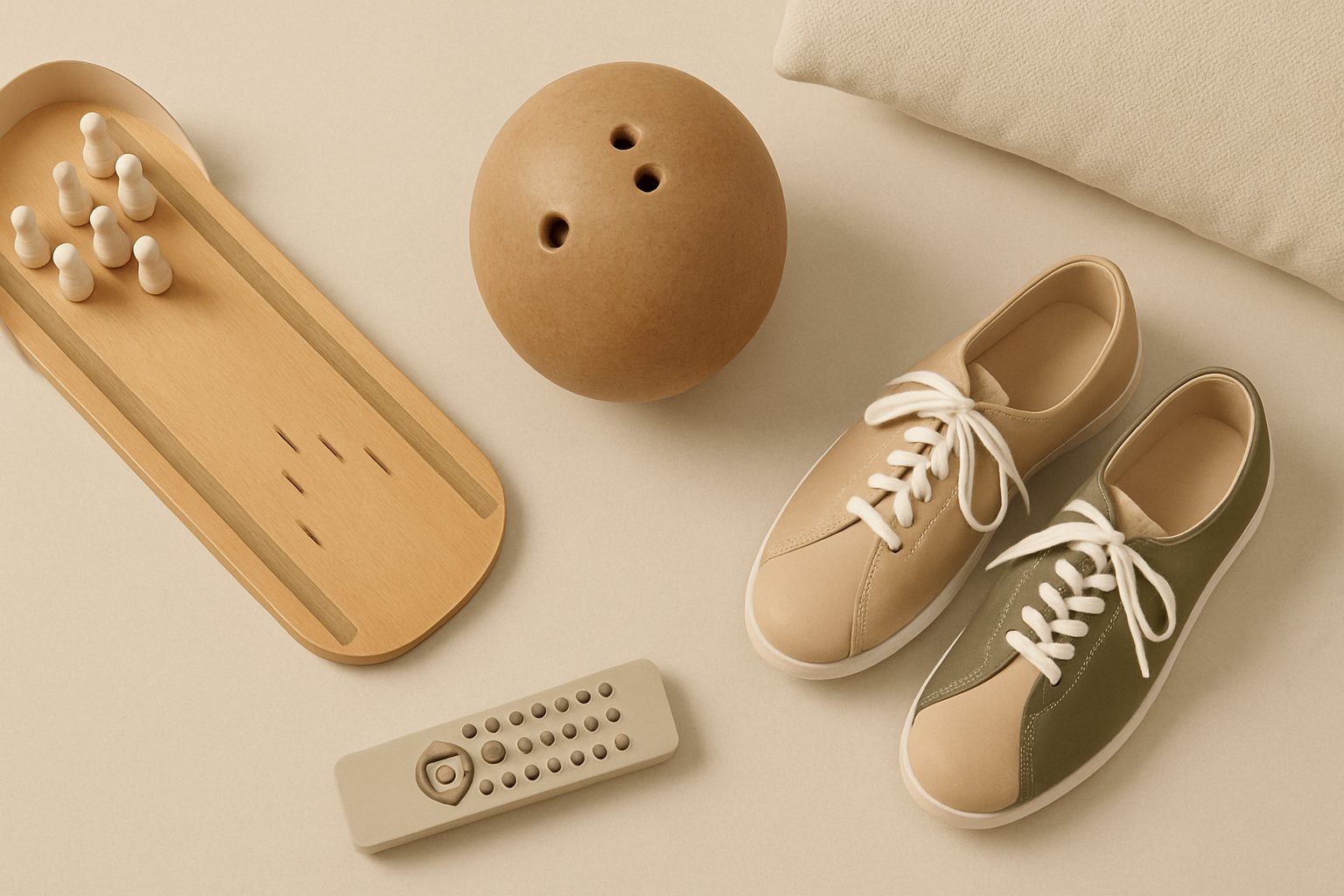
Best Mini Bowling Alleys for UK Homes With Limited Space (2026)
A full-sized bowling lane runs 62 feet. Most UK terraced houses and flats don't have 62 feet of anything. But if you want the fun of bowling at home without renting commercial space or gutting your garden, you have realistic options—and they've improved significantly in the last few years.
The real choice isn't whether mini bowling is possible. It's which format suits your space, budget, and actually gets used. Here's what works in British homes.
Short Lanes (15–30ft): The Most Playable Option
These are proper lanes in miniature: synthetic surfaces, genuine pin mechanics, sometimes automated scoring. You're looking at brands like QubicaAMF's short-lane systems, Brunswick's Quantum lanes, or specialty imports.
What you get: Real bowling. The pin action feels legitimate. Heavier balls (6–10lb) roll properly. If you have a spare bedroom, basement, or dedicated games room with 20–30 feet of length, this category delivers the experience.
Space reality: You need at least 20 feet of unobstructed run. In a terraced house, that's rare. You'd likely be using a garage, extending into a garden building, or claiming an entire room. Width varies—some systems need just 12 feet side-to-side, but you'll also need pin-setting space behind the lane (4–5 feet minimum).
Cost: £8,000–£25,000 installed. Budget another £1,500–£3,000 for professional fitting, electrical work, and levelling. These aren't DIY weekend projects.
Durability: If you buy a decent system, it'll last 10+ years with minimal maintenance beyond the occasional surface clean and pin replacement. Automatic ball returns and electric pin-setters add complexity, so warranty and support matter.
Honest limitation: Once installed, you're committed. Moving house means leaving it behind or paying removal costs that make resale impractical. These suit people planning to stay put.
Tabletop and Portable Sets: Instant but Limited
Freestanding mini lanes that sit on a pool table or dedicated low frame. Think of them as novelty-grade but surprisingly functional: typically 8–12 feet long, plastic or wood lanes, manual pin setup.
Popular models include tabletop versions from brands like Playcraft or generic online imports (check reviews—quality varies wildly).
What you get: Proper fun for casual play. A game with friends or family takes 10 minutes. The pins feel satisfying to knock down. Lightweight balls (3–5lb) work fine.
Space reality: Any dining room or games room of modest size works. You can push it against a wall when not in use if it's a rollaway model. Flats, terraced houses, small homes—these fit.
Cost: £300–£1,200 depending on build quality and frame sturdiness. No installation cost.
Durability: Plastic lanes wear quickly under regular play. Wood-based surfaces last longer but need care. Pins snap (spare sets cost £30–£50). Budget for replacement pins annually if you play weekly. These typically have a 3–5 year lifespan with moderate use.
Why it's appealing: Low commitment. If it doesn't get used, you've spent less and can sell it on quickly. You can demo it before upgrading to a full lane.
Honest limitation: It's not quite the same experience. The pins respond differently. The roll feels off on a short 8-footer. If serious bowling is the goal, these often disappoint after a month.
Collapsible Lane Kits: The Compromise
Hybrid option: a synthetic lane surface (3–4 feet wide, 12–15 feet long) that rolls up when not in use, paired with a simple ball return mechanism. Some sit on top of existing furniture; others stand alone.
These are newer and less common in the UK market than in the States, but options are emerging through online retailers and specialist gaming suppliers.
What you get: A lane that actually plays like bowling but takes up minimal permanent space. Better feel than tabletop, less commitment than full installation.
Space reality: Needs a clear run of 12–15 feet but only during play. Can store rolled up in a cupboard or under a bed. Ideal for larger flats or homes where space is tight but available.
Cost: £1,500–£4,000. Cheaper than short lanes, more expensive than tabletop sets, less than the installation hassle.
Durability: The rollable surface degrades faster than a permanent lane. Count on 5–7 years before you notice wear. Joints and return mechanisms are failure points.
Real trade-off: You save space by sacrificing surface longevity and the genuine feel of a full lane. It's better than tabletop bowling but honestly falls between categories without being excellent at either.
What Actually Works in a UK Home
Think about usage first. Will someone actually bowl twice a week, or is this a novelty that'll gather dust?
For casual family fun in a limited-space home: a tabletop set (£400–£800) is honest. You'll get genuine amusement, and if it fails after two years, you haven't overspent.
For serious bowlers willing to commit garage or garden space: a 20–25ft short lane is the only option that doesn't feel compromised. Yes, it costs real money, but it delivers actual bowling.
Collapsible lanes sit in the awkward middle—better than tabletop but more hassle than they're worth unless your space constraints are severe.
The practical checklist:
- Measure your available run (floor length) in metres—be honest
- Check whether you have the width (minimum 3 metres ideally)
- Visit a local bowling alley and hire lanes to confirm you actually enjoy it
- Get quotes from at least two suppliers (UK fitment differs by region)
- Ask about pin and surface replacement costs before buying
- Read genuine user reviews for the specific model, not just the brand
Mini bowling at home is realistic in the UK. It just requires matching the system to your actual space and honestly assessing whether you'll use it.
More options
- Portable & Tabletop Bowling Sets (Amazon UK)
- Synthetic Bowling Lane Flooring Kits (Amazon UK)
- Bowling Ball & Bag Sets (Amazon UK)
- Automatic Pin-Setting Machines (Amazon UK)
- Bowling Lane Accessories (Oil, Cleaners, Bumpers) (Amazon UK)